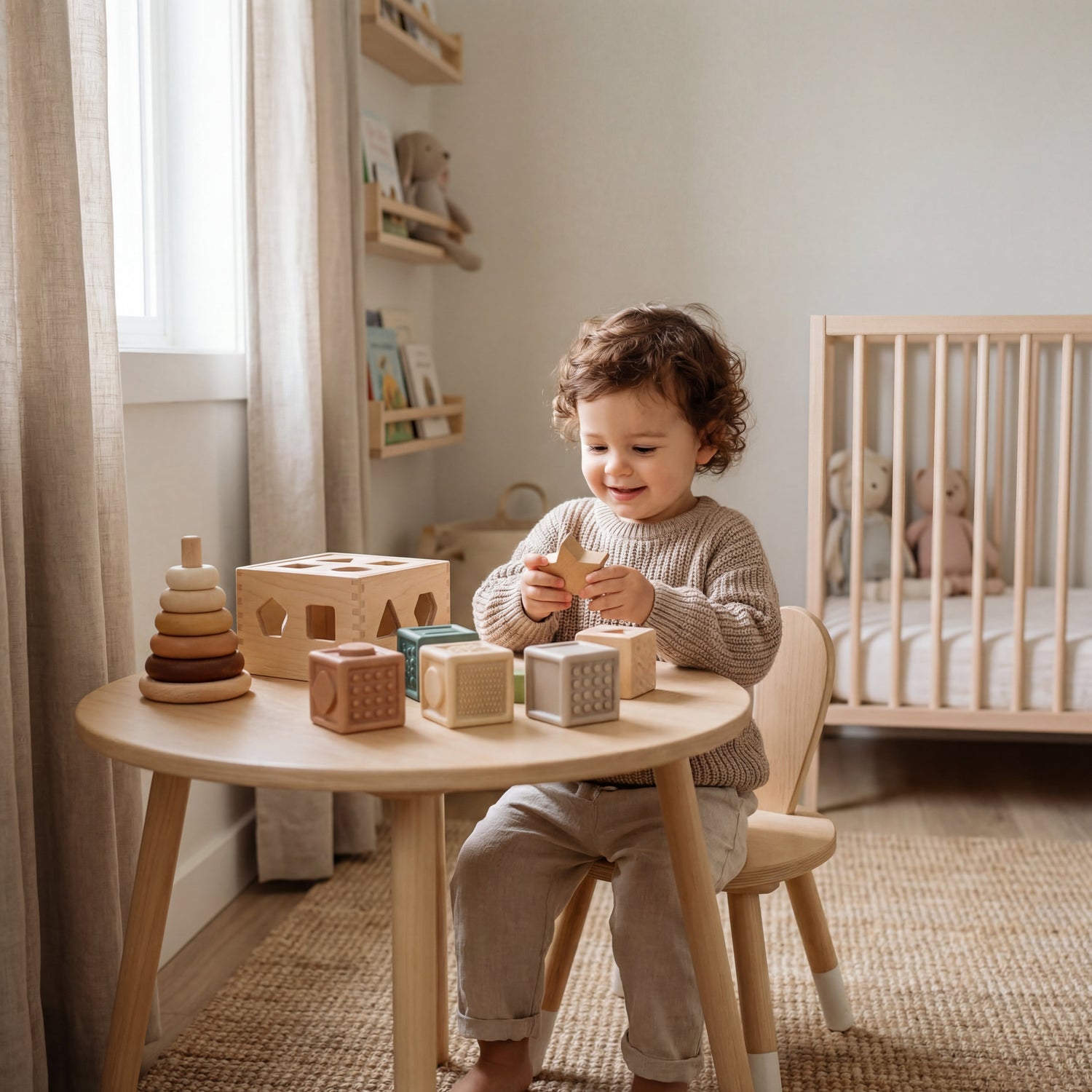
Sensory play corresponds to the natural way children discover the world. By touching different textures, sorting shapes, or observing colors, they learn how objects respond to their actions. These simple activities support awareness, attention, and early problem-solving. Sensory play does not require complicated materials; objects that can be stacked, carried, or placed in a specific spot already provide valuable experiences. Repetition helps children maintain focus and gives structure to their play. Since most sensory items have a neutral appearance, they can be widely used and support both independent and group play. Parents appreciate the calm and mindful atmosphere that accompanies sensory play. The idea of sensory stimulation is a sensitive approach that allows children to explore the world in their own way, at their own pace and rhythm, without demands or rigid rules. Sensory play is a very natural part of children's development and helps them discover the world through experience and curiosity.